Turmoil & Chaos The Clash of the Conscious and Unconscious
The Middle Ages, also known as the Dark Ages, were a time between the golden age of the Roman Empire and the rediscovery of such learning that produced the Renaissance and Enlightenment. And so it is also with the middle ages of a person's life between the golden glow of youthful vigor and potential and the wisdom of maturity. The youthful gold is the possession of fools and becomes tarnished or spent and the illumination of meaningful maturity is not yet within sight; for many midlife is the Dark Ages--a time and place of shadows.
The roots of transitional crises--midlife--are in childhood. Throughout life portions of the Self fragment away, burying deep within the Shadow of the psyche, which is comprised of facets of the personality within the unconscious. During life transitions a person has the opportunity to acknowledge these buried pieces and integrate them into his conscious Self. This has the potential for great turmoil; a person may not like or want to acknowledge many of those surfacing fragments, but regardless they will surface and may create an internal civil war between the conscious and the unconscious or Shadow. To give greater power to one side or the other and allow one side to dominate is to lose one's balance and be without a center. The act of resisting and refusing one side upsets equilibrium and the entire system experiences chaos; yet to confront the Shadow is to meet a wall of resistance; it is to see the enemy and recognize it is one's Self, thereby throwing all self-knowledge to doubt.
The Shadow
Literally, a shadow is a region of darkness created when an opaque object with light in front of it blocks the light. The visible phenomenon is a reverse projection of the opaque object. Illumination is figuratively associated with consciousness, awareness and understanding, therefore a region not penetrated by light is its opposite: unconscious, a lack of awareness and understanding. But the opaque object bathed in light is the creator of the shadow and thus the object and its shadow are components of a single being. This region where light does not fall is also without the lights' heat. A shadow is cold, without substance and it hides itself behind matter.
The repressed and suppressed fragments of Self within the Shadow are those aspects of ourselves of which we are afraid and perhaps ashamed. In their primitive form, the unconscious archetypes (anima/animus, Shadow) are irrational and operate through projection, an action which denies characteristics in the Self by perceiving them in others. These fragments vary from the painful to the beautiful--ranging from physical or sexual abuse to a missed or forgotten hug. They resurface, haunting us with their existence and fierce urgency. The midlife journey is an opportunity to reconnect with the lost fragments. To become whole, a person must reintegrate the fragments and embrace the Shadow Self. Only then will a person have the capacity to release those pieces deemed unwanted and recreate a new Self from the remaining fragments.
Since the roots are in childhood, the repressed qualities within the Shadow are primitive and instinctive. They are of a different developmental maturity than the conscious and thus when the two meet, the conscious fears the Shadow; it is ashamed and embarrassed by these barbaric fragments within himself and thus he seeks to keep them hidden. A person who learns to read to an advanced level but learns no mathematics cannot begin his mathematics training at the same level of his present literacy. He must begin at the beginning with fundamentals, building a framework for understanding the new concepts. This does not mean the person's literacy level regresses. A person must enter new experiences from a place of child-like innocence, regardless of chronological age, and left-behind experiences at the same level he was when he abandoned them. An MLCer often fails at this, discarding responsibility and regressing beyond what is necessary.
MLC is a case of the Shadow gone autonomous, yielding what I refer to as Monster. This differentiates a midlife of crisis proportions from a midlife transition without crisis. With or without crisis, the process of integrating the Shadow may not be easy; it may be tumultuous and confusing. It can be scary to acknowledge the denied and refused facets of Self and not everyone will surrender to these primitive secrets. To resist is to enter a journey of crisis, and yet the same is true of surrendering complete control. Because their behaviors are in opposition to their true nature, and they have relinquished their power to an archetype within their Shadow, MLCers are fragmented. Though it is appropriate to seek guidance and influence from the various personal archetypes, to abdicate complete control is to render one's Self powerless. A person's unconscious forces are ethically and morally neutral; it is the conscious ego-mind that oversees maintenance of personal value systems. Once integrated into the conscious mind, these formerly unconscious elements assimilate a person's moral and ethical values, but as parts of the unconscious they lack such capabilities and are thus dangerous when allowed to usurp authority of the controlling head--the king or queenship that is the conscious self.
Even the beauty within the Shadow may express itself as the much-feared Monster. If allowed to surface briefly, it may fear a return to the secret prison within the Shadow, and even beauty may become angry when denied expression. Everyone will face their Shadow, to refuse it, deny it and attempt to stamp it into oblivion, ironically provides it with the means to take control. It is only destructive when dismissed, denied and ignored; resistance invites resistance, whereas surrendering is an acceptance that enables integration, subduing the Monster in the dark.
Do you feel like a deer about two seconds after seeing the headlights?
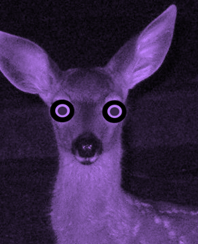
You know you’ve gotta stop crying, panicking or asking your spouse ANYTHING. And you know you should let-go and give space so that you can learn to respond and communicate with your spouse from a place of calm rather than emotional hurt.
Introducing
Understanding Midlife Crisis
The foundational course to give you answers and clarity into "What the he!! Is going on with my spouse!"