Understanding Love & Infidelity
What is Love?
Limerence Vs. In-Love
Limerence is an energetic state of emotion as well as a biological state distinguished by fantastical expectations of idyllic passion without consideration for growth and development of the relationship. Often referred to as in-love, it is an imitation of being in-love and therefore shares some of the same components, but is not a form of love--not even eros. For many relationships it is a seed that may or may not grow into in-love and can be a fuel for eros as well as for lust and attraction. But limerence itself is wholly absent from reality, without which it can never develop to a state of being in-love. MLCers lack the ability to differentiate fantasy from reality. Though limerence chemicals contribute to this confusion, they do not prevent recognition of reality--though they can make it a challenge. limerence can override rational behavior and brain functioning; the hormonal flows activate the reward and pleasure center while disabling a person's ability related to moral judgment and suppressing neural circuits associated with assessment of others. In MLC it is the simultaneous emotional burdens of the identity crisis along with the self-medicative limerence hormones that inhibit reality and make a person susceptible to the illusion of fantasy. In Why We Love, Dr. Helen Fisher, an anthropologist and one of the foremost researchers in the science of love, outlines three phases toward love. These are outlined below along with the neurotransmitters and hormones associated with each phase.
The Phases Toward Love
- Lust
Libido: Attraction of the sex organs. Concerned with initiating mating with an assortment of partners. Evolved to increase the chances for continuing the genetic line. - Testosterone
Stimulates thoughts about sex and increases libido in both men and women. - Estrogen
Associated with female libido, lubrication and elasticity. - Attraction
Limerence: Intense emotional swings associated with early stages of romantic partnership characterized by dependence, separation anxiety, obsessive focus along with physiological responses: pounding heart, sweating palms and shortness of breath. Evolved to focus energy on a single partner, a step toward monogamy. - Dopamine
 The pleasure-reward system of the brain, it reinforces behaviors that make us
feel good and is associated with euphoria, sleeplessness, loss of appetite, and a
rush of motivation, as well as addictions to certain substances. Possibly linked
to novelty-seeking and risk-taking behaviors.
The pleasure-reward system of the brain, it reinforces behaviors that make us
feel good and is associated with euphoria, sleeplessness, loss of appetite, and a
rush of motivation, as well as addictions to certain substances. Possibly linked
to novelty-seeking and risk-taking behaviors. - Norepinephrine
Affects the attention and reaction centers of the brain, associated with increased heart rate, blood flow, and energy levels. - Serotonin (decrease)
Linked to tranquility, reason, calm; decreased levels have been linked to obsessive-compulsive disorder and may explain the obsessive qualities associated with limerence. - Attachment
Love & Commitment: Establishes feelings of comfort, union, trust and safety. Evolved to form a committed partner-bond for the purpose of raising offspring. - Oxytocin
Associated with the formation of adult-pair bonds and mother-infant bonding and is released during a variety of relationship-building activities such as hugging, touching, orgasm, child birth, and lactation. Release of oxytocin creates heightened sexual arousal and post-coital desire for bonding. It is also associated with an increase in maternal instinct following childbirth, empathy, generosity, trust and a reduction in fear. - Vasopressin
Released after orgasm and possibly in preparation for expectant fatherhood when cohabiting with the expectant mother, vasopressin increases a male's devotion and the expression of protective behaviours toward his mate and offspring while decreasing aggressive tendencies.
Often there are needs the spouse is not or was not meeting that the other woman is meeting, but these are not due to spousal neglect, rather they are due to the midlifer's refusal to allow the spouse to meet these needs. Some cheating midlifers continue sexual relations with agreeing spouses, some would continue, but the spouse refuses. But after disclosure or discovery many transfer monogamy to the other woman, thereby forbidding the spouse from meeting the midlifer's sexual and accompanying needs.
Instinct rules the primitive brain systems, whereas critical thinking and imagination (the application of creativity) rein supreme in the neocortex, the most advanced and final brain portion to evolve. The neocortex enables humans to recall the past and visualize the future, thereby defining the experience of time and allowing for sequential thinking. It is the portion allowing for language, writing and speech. The primitive brain systems react instinctively and make excuses for behaviors, whereas the neocortex is the check-and-balance center for the primitive systems, assessing and requiring responsibility of all actions--instinctive or chosen. The three portions of the brain create a synergistic system working in concert; all systems are necessary for functioning. MLCers are responsible for their behaviors, even when in the hormonal clutches of limerence.
Attraction
Toys are a well known luxury of male MLCers--the MLC sports car has become a stereotypical midlife joke. A peacock's feathers are indicative of health and yet they lack functionality and can be a hindrance. They are all beauty, a sign of ornamentation or status, like a corvette--nice engine but it can't change a diaper. For physically mature human males, toys such as cars, motorcycles and boats are analogous to male adornment in animals. Females assess a potential mate based on status, which is indicative of his ability to provide. Males assess potential mates based on physical attractiveness, which is indicative of her ability to bear healthy children.
Do you feel like a deer about two seconds after seeing the headlights?
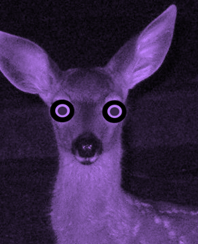
You know you’ve gotta stop crying, panicking or asking your spouse ANYTHING. And you know you should let-go and give space so that you can learn to respond and communicate with your spouse from a place of calm rather than emotional hurt.
Introducing
Understanding Midlife Crisis
The foundational course to give you answers and clarity into "What the he!! Is going on with my spouse!"